The cost of a fleet rarely starts when the invoice arrives. It usually starts earlier, in a poorly planned route, an unmonitored stop, postponed maintenance, an underused vehicle, a driver without feedback or data that exists but is not turned into a decision.
That is why fleet management can no longer depend only on phone calls, spreadsheets, manual confirmations or month-end analysis. When a company only looks at the operation after the problem has happened, the decision comes late. Fuel has already been used, the vehicle has already stopped, the customer has already waited, the team has already lost time and the manager is already reacting instead of anticipating.
Telematics, GPS and monitoring become relevant precisely at this point. They are not only useful to know where a vehicle is. They help understand how the fleet is being used, which patterns repeat themselves, which deviations need attention and which decisions can be made before the cost becomes consolidated.
In this article, we bring together 10 practical tips for companies that want to manage fleets with greater visibility, predictability and response capacity.
Efficient fleet management starts with a change in mindset. The goal is not only to reduce costs at the end of the month. The goal is to understand how those costs are formed throughout the operation.
In a business fleet, waste may appear in several areas: unnecessary mileage, extended idling, repeated routes without need, vehicles stopped for too long, overdue maintenance, excessive use of some vehicles and low use of others. Each situation may seem small when seen in isolation. But when it repeats every day, across several vehicles and teams, it becomes a problem for margin, productivity and service quality.
The challenge is that many companies only identify these patterns when they analyse financial reports, fuel cards, customer complaints or unexpected downtime. By then, they are no longer managing the cause. They are dealing with the consequence.
That is why the central question is no longer only “how much did the fleet cost this month?”. The right question becomes “what signals did the fleet give before this cost appeared?”.
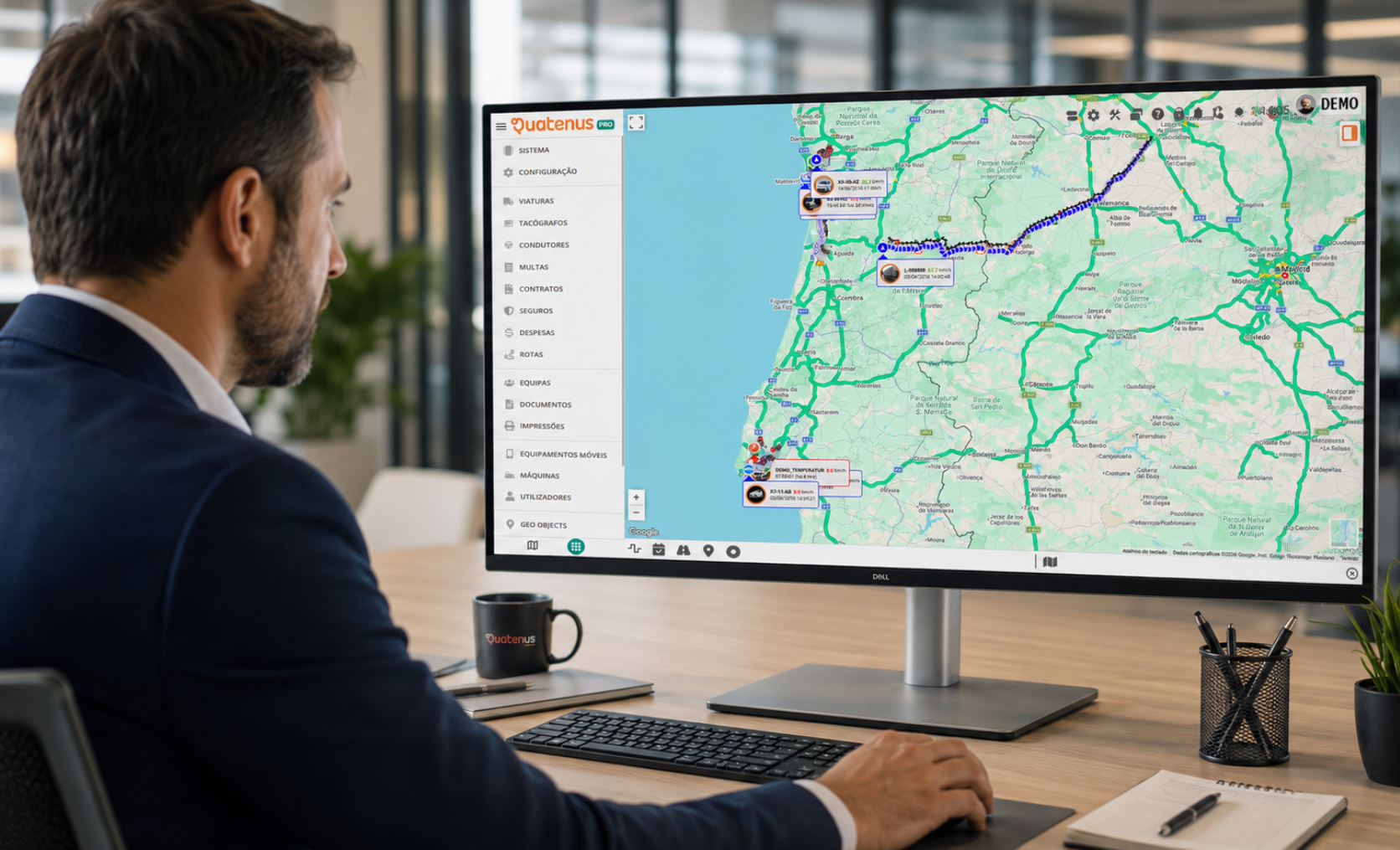
GPS location is an important foundation, but it should not be seen as the final point of fleet management. Seeing a vehicle on a map helps, but it is not enough to understand whether the operation is working well.
The difference lies in the quality of the information and in how that information is used. A company needs to know where its vehicles are, but it also needs to understand how long they remain stopped, which routes they take, which deviations are repeated, which vehicles are underused, which routes create greater pressure and which signals should trigger a decision.
This is where telematics becomes valuable. By turning operational data into practical insight, the company stops relying only on perceptions. The manager starts working with evidence: journeys, times, patterns, alerts, usage, behaviour and history.
Monitoring, when properly applied, is not meant to create complexity. It is meant to reduce uncertainty. It helps separate what is normal from what requires attention, what is occasional from what repeats, and what can wait from what needs an immediate response.
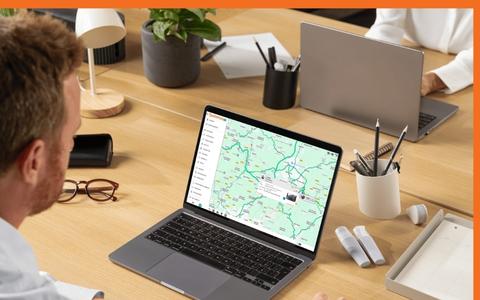
The first mistake many companies make is confusing location with management. Knowing that a vehicle is in a certain area may be useful, but the real question is different: does that information help the manager make a decision?
In distribution, field service, transport, construction, private security or external service operations, location only becomes valuable when it is connected to context. The manager needs to understand whether the vehicle is at the expected location, whether it arrived within the expected time, whether it remained stopped for longer than usual, whether it followed a coherent route and whether there is operational proof of the journey.
In practice, GPS should answer concrete questions: where the vehicle is, where it has been, how long it took, which stops it made and which pattern repeats itself. When this data is available clearly, the company can respond faster to delays, deviations, customer questions or task reorganisation.
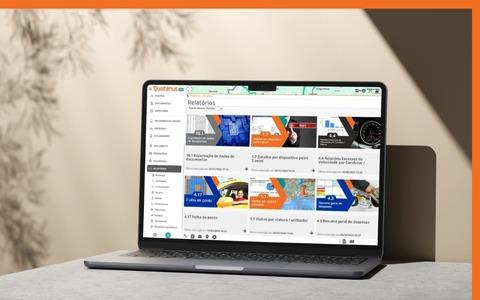
Having a lot of data does not mean managing better. Many fleets accumulate dashboards, reports and maps, yet still lack a clear decision routine. The problem is not the absence of information. It is the absence of priority.
Before choosing what to monitor, the company should ask: which decisions do we need to make every week? It may be reallocating vehicles, reviewing routes, reducing extended stops, following maintenance, analysing use by team, validating mileage or identifying driving patterns that increase wear.
Each indicator should have a purpose. Mileage per service helps understand route productivity. Stopped time may reveal waiting, disorganisation or improper use. Vehicle utilisation shows whether the fleet is properly sized. Maintenance history helps anticipate downtime risk.
The rule is simple: if a data point does not help make a decision, it may just be noise.

Fuel is one of the most visible pain points in fleet management, but it should not always be treated as the main cause. Often, higher than expected consumption is only the symptom of previous operational decisions.
A vehicle may consume more because it follows poorly planned routes, spends too much time idling, carries loads inefficiently, accumulates route deviations, drives at unfavourable times or is driven aggressively. If the analysis is limited to the invoice, the manager sees the cost, but not the behaviour that caused it.
That is why the combination of GPS, telematics and monitoring is so important. Fuel consumption should be read together with route, stops, engine-on time, mileage, service type and vehicle usage. Only then can the company distinguish a one-off increase from a pattern that needs action.
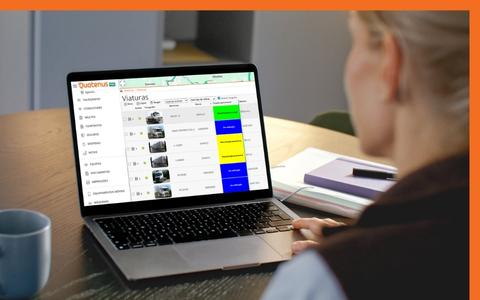
Preventive maintenance should not depend only on the calendar. Two identical vehicles may have very different wear levels if one operates in urban routes with many stops and the other runs long road journeys. The same applies to load, temperature, driving style and frequency of use.
When a company manages maintenance only through memory, manual sheets or scattered reminders, the risk of delay increases. And delayed maintenance rarely affects only the workshop. It may affect vehicle availability, service fulfilment, customer satisfaction and team planning.
Telematics and monitoring help create a more realistic view of fleet usage. Mileage, usage hours, circulation patterns and occurrence history become planning signals. The goal is not to repair better after a breakdown. It is to reduce the likelihood of unexpected downtime.

Having too many vehicles costs money. Having too few limits response capacity. The balance lies in understanding the real use of the fleet, not only the team’s day-to-day perception.
In many businesses, some vehicles seem indispensable because they have “always been available”. But when usage is analysed, a different reality may appear: vehicles stopped for long periods, teams with low vehicle occupation, peaks concentrated on certain days or routes that could be reorganised.
The opposite also happens. A fleet that seems sufficient may be putting too much pressure on certain vehicles, increasing wear, mileage and downtime risk. Without data, the manager decides by feeling. With monitoring, it becomes easier to understand which vehicles are underused, which are overloaded and which adjustments make sense before buying, selling, replacing or contracting.
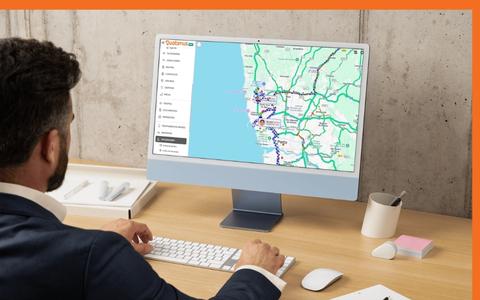
The best route is not always the shortest one on the map. It may be the one that better respects time windows, reduces waiting, avoids critical areas, considers customer type, groups similar tasks and reduces movements without value.
In the market, this difference is clear in distribution, maintenance, technical assistance, home services or sales teams. A poorly designed route may increase mileage, delay appointments, create overtime and damage the customer experience. Often, the problem is not traffic. It is the lack of connection between planning and real operational data.
By analysing route history, arrival times, stop duration and repeated journeys, the company can identify routes that need review. The goal is not only to travel fewer kilometres. It is to make better use of each movement.

An alert only has value when it helps action. If the team receives too many notifications, it stops distinguishing what is relevant. Monitoring becomes noise and the manager returns to manual analysis.
That is why alert rules should come from the operation. Which situations require immediate response? A vehicle outside the expected area? A prolonged stop in a critical service? Usage outside working hours? Maintenance close to its limit? A recurring deviation on a sensitive route?
Each company should define priority levels. Not everything has the same weight. Some alerts require action in the moment. Others are useful for weekly analysis. Others only help identify trends. Efficient fleet management does not depend on receiving more notifications. It depends on receiving useful signals, at the right time, with enough context to decide.
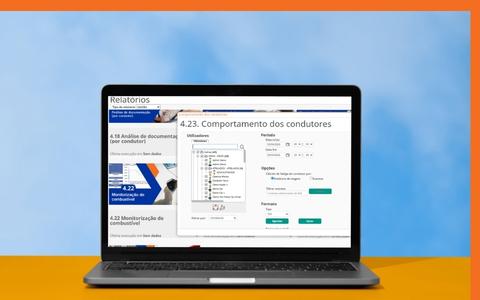
Safety and driving behaviour are sensitive topics. If they are treated only as supervision, they may create internal resistance. If they are treated as operational improvement, training and team protection, they become much more useful.
Driving influences fuel, wear, accident risk, comfort, company image and vehicle availability. Harsh braking, frequent acceleration, speeding or extended idling may indicate the need for guidance, training or route review.
The essential point is communication. Drivers should understand that monitoring is not meant to punish automatically, but to create a standard of safety and improvement. When data is used with context, the company can support the team, reduce risk behaviours and create a more consistent operation.

The decision to buy, replace, keep, lease or rent should not be made only by monthly price or acquisition value. It should consider usage type, expected mileage, wear, maintenance costs, availability and vehicle suitability for its role.
A vehicle that seems cheap may become expensive if it is not suitable for the operation. It may consume more, require frequent maintenance, have insufficient capacity or force additional trips. In the same way, keeping a vehicle for too long may reduce depreciation pressure, but increase downtime, repairs and availability risk.
Fleet management becomes more mature when the company connects purchase or replacement decisions with real data: mileage, usage time, usual routes, load profile, maintenance history and service criticality.

When choosing a GPS, telematics or fleet monitoring solution, the monthly price is only one part of the decision. The company should evaluate proposal clarity, installation process, initial support, training, ease of reading information, contractual conditions and the ability to turn data into a management routine.
A system may look attractive in a quick comparison, but fail to create value if the team does not know how to use it, if the data is difficult to interpret or if the company does not define internal processes to follow indicators. Technology alone does not solve a disorganised operation. It makes that operation more visible. Improvement comes when the company uses that visibility to decide better.
Before choosing, it is worth asking: which problem do we want to solve first? Which indicators will be monitored? Who will analyse the data? Which decisions will be made every week? How will the team be trained? Which conditions need to be clear from the start?
The best way to apply these 10 tips is not to try to change everything at once. The most consistent path is to start with a concrete pain point.
If the main problem is fuel, the company should cross-reference consumption, routes, stops and usage. If the problem is maintenance, it should structure alerts, history and priority criteria. If the problem is productivity, it should analyse mileage per service, stopped time, delays and task distribution. If the problem is safety, it should work on driving behaviour with context, training and clear internal communication.
A simple routine can start with four steps.
The value of monitoring lies in continuity. A one-off analysis may explain a problem. A monitoring routine helps prevent that problem from repeating.
When fleet management is based on useful data, the company stops working only in reactive mode. The manager gains greater clarity over how the operation works, the team gains more objective references and the company can align costs, service and availability.
The benefits are not limited to savings. The fleet becomes more predictable. Decisions depend less on assumptions. Maintenance becomes better planned. Routes can be reviewed based on evidence. Fuel is analysed in context. Drivers receive fairer feedback. Vehicles are used in a more balanced way.
Ultimately, efficient fleet management does not start when the company tries to cut costs. It starts when it understands better what happens every day in the operation.
Would you like to understand how telematics, GPS and monitoring can help your company anticipate decisions in fleet management?
Talk to Quatenus and discover how to turn operational data into greater visibility, better planning and faster decisions.
Contact usFAQ
Fleet management is the set of processes used to monitor, organise and improve the use of vehicles within a company. It includes areas such as location, maintenance, routes, costs, fuel, safety, productivity, documentation and vehicle availability.
GPS helps monitor vehicle location, analyse journeys, validate arrival times, identify deviations and improve operational response. Its value increases when location is combined with context, such as stops, routes, schedules and real fleet usage.
GPS is more closely connected to vehicle location and route. Telematics provides a broader view of the operation, bringing together data on usage, behaviour, patterns, events and performance. Together, they help turn the fleet into a source of decision-making information.
Because they rely on invoices, manual reports, fuel cards or late validations. When continuous monitoring is not in place, the signals appear during the operation but are only analysed later. By then, the cost has already happened.
The company should start with the problem it wants to solve: fuel, routes, maintenance, safety, usage or operational visibility. Then, it should evaluate data clarity, installation process, training, support, contractual conditions and the solution’s ability to support practical decisions.
Related